

New IBC
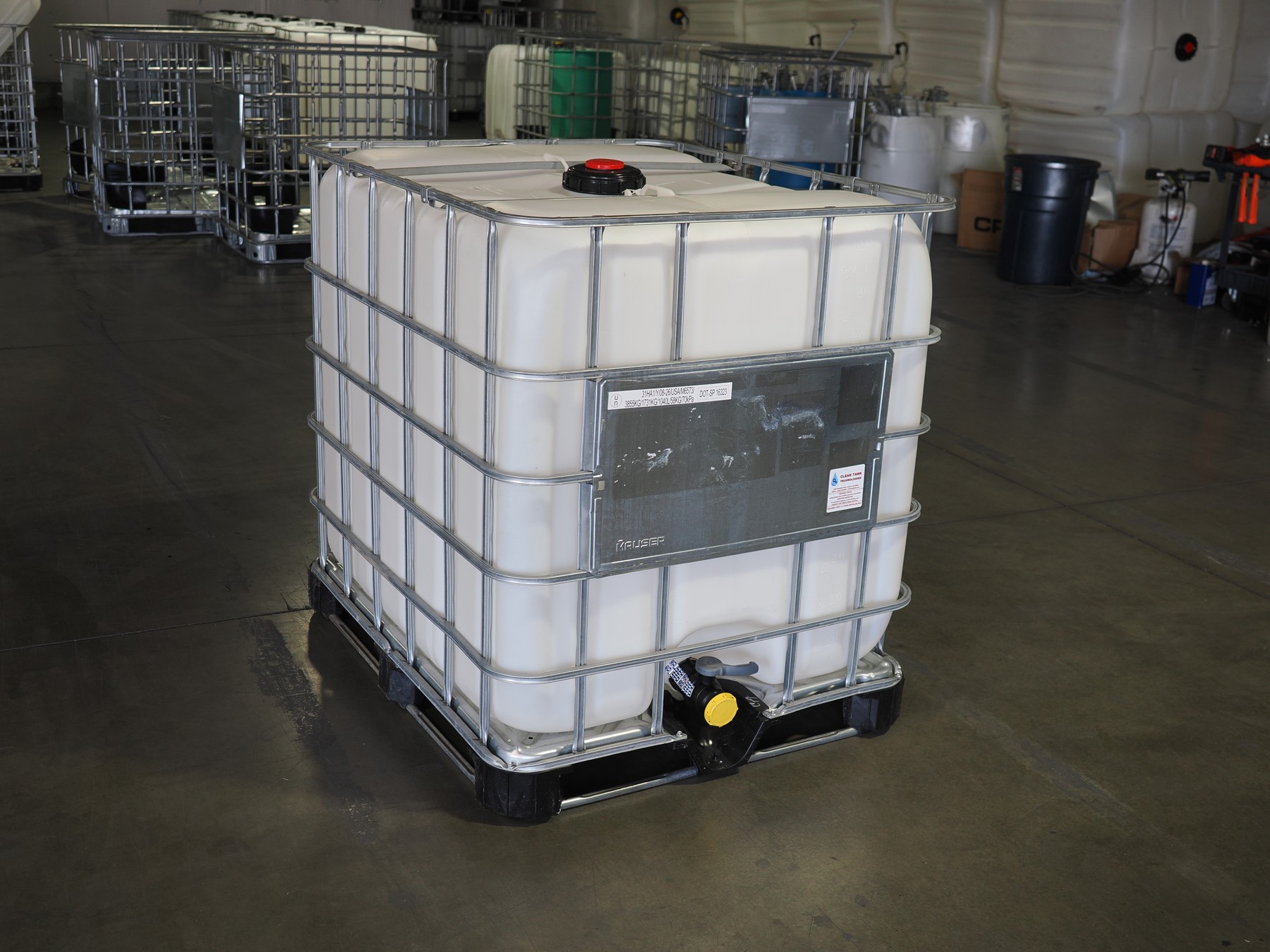
New inner bottle, cage and structural components. The 125G IBC is offered only in this condition.
Home / IBCs & Poly Drums
Industrial containers
A single reference for the sizes and conditions Clean Tank supports—and the application questions that matter more than a product name alone.
Begin with the application
Contents, compatibility, transportation status, filling and dispensing, lids, valves, handling and documentation can all affect which container configuration deserves consideration.
Intermediate bulk containers
“New,” “rebottled” and “reconditioned” describe different component histories. They should not be treated as interchangeable terms.
| IBC size | New | Rebottled | Reconditioned |
|---|---|---|---|
| 125 gallon | Available | Not offered | Not offered |
| 275 gallon | Available | Available | Available |
| 330 gallon | Available | Available | Available |
Final availability, design type, markings, lids, valves and suitability depend on the requested application and inventory.
New inner bottle, cage and structural components. The 125G IBC is offered only in this condition.
A new inner bottle paired with a previously used, inspected outer cage. Available in 275G and 330G.
A previously used bottle and cage processed for an appropriate application, with applicable inspection and testing.
IBC components
Most conversations can start with six common names. Accessories such as gaskets, caps, seals, vents and tamper-evident devices belong with the part they serve. Exact designs vary.
When exact terminology matters: Regulations, design approvals and manufacturer records may use terms such as inner receptacle, outer frame, base, filling opening, discharge opening, closure, service equipment or appurtenance. Those formal terms should be retained when interpreting a specific requirement.
A composite IBC is evaluated as an assembled packaging system. For a UN design, closures and service equipment must conform to the qualified design and be installed and closed correctly.
Industrial poly drums
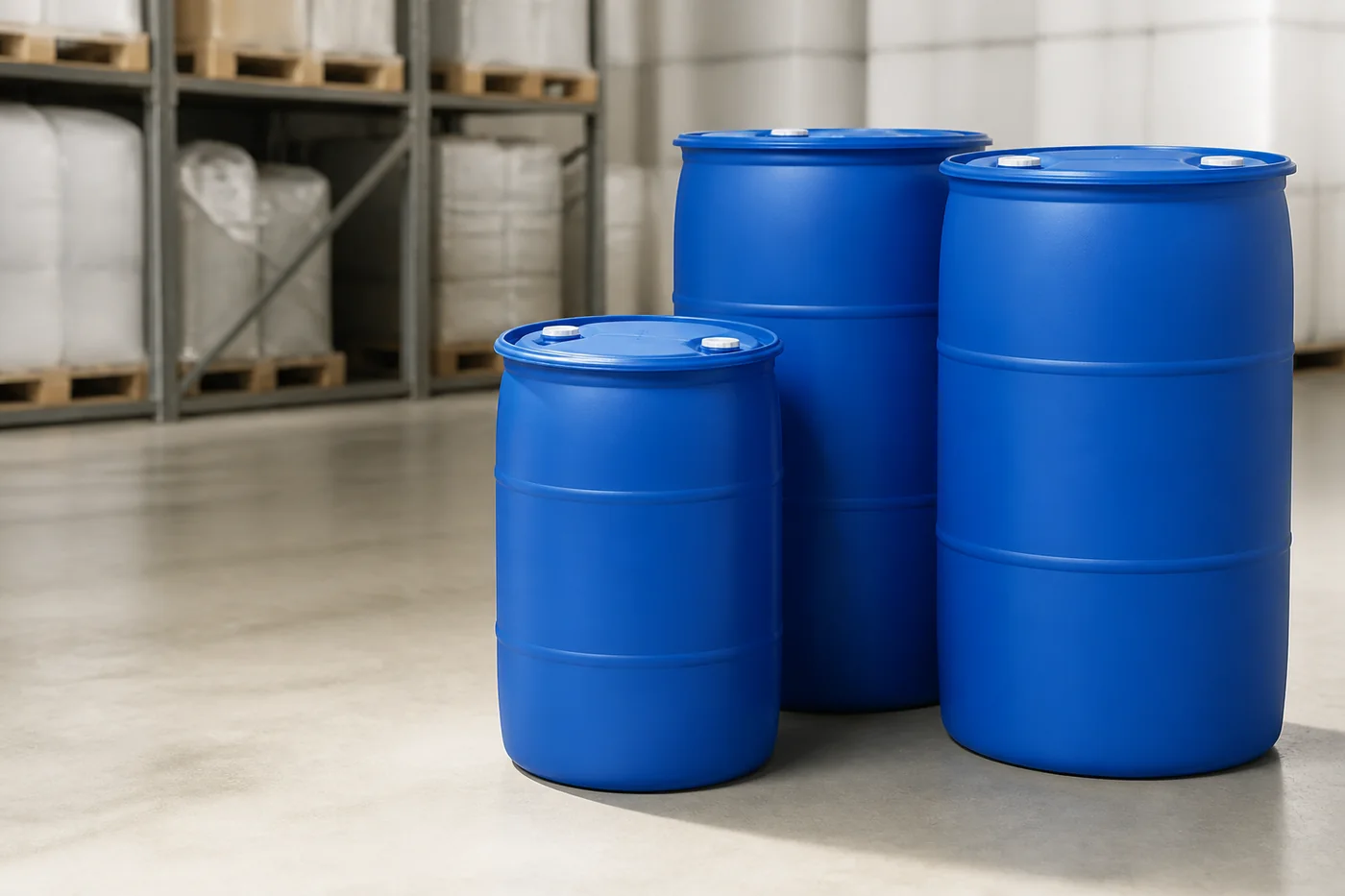
New drums are the primary offering. Selected reconditioned availability may be discussed when the application and prior-use considerations make it appropriate.
New industrial poly drums with configurations considered against the material, use and handling requirements.
New industrial poly drums with cap, bung and vent options discussed for the application.
Represented as a secondary option for selected applications, not as the primary drum offering.
Product documents
Use these PDFs as starting references. Current inventory, design type, markings, components and application fit must be confirmed for the container being supplied.
A 30G drum specification sheet is not currently available. Closure values are configuration-dependent; use the instructions applicable to the identified manufacturer and supplied container.
Product questions